

Self-Care as Resistance | Monday Invocation
“Resistance conveys strength, activity, intention, and purpose. We need a word this strong to help us practice self-care and contend with the toxicity of people pleasing, grind culture, and savior complexes.”
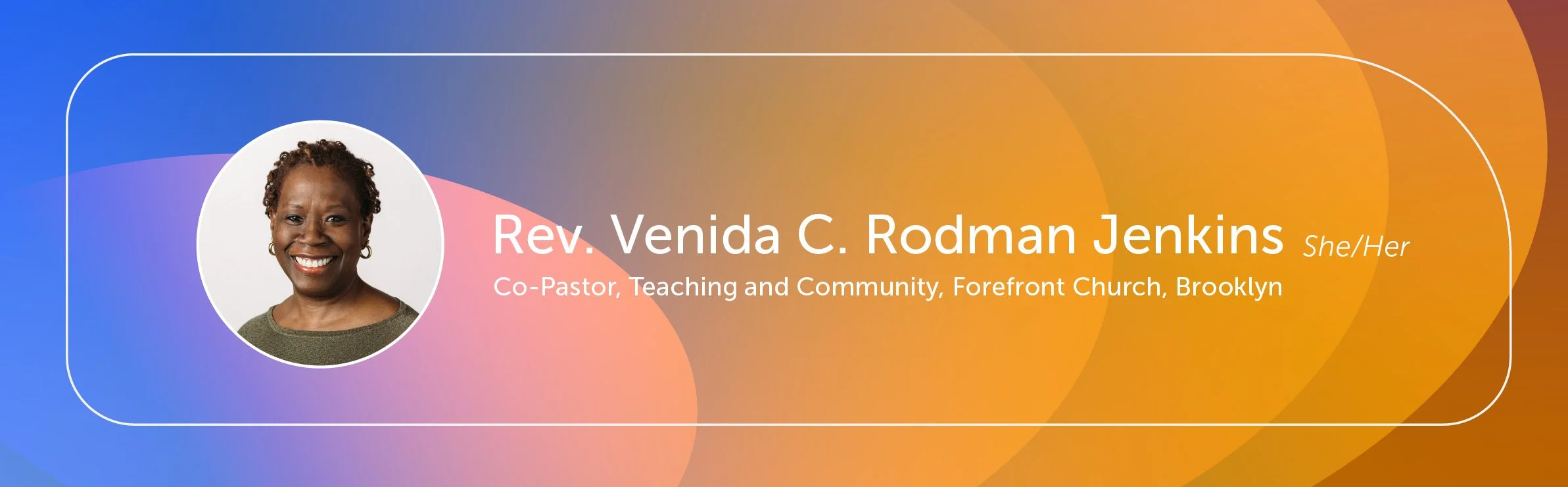
Rev. Venida C. Rodman Jenkins
We often hear about forms of resistance like protesting, voting, boycotts, sharing resources, and other types of organizing and coalition building. But resistance is not only something that we do on a public scale or at the ballot box. It’s also the values that shape how we show up every day and what we refuse to accept as “normal,” how we care for one another, and how we stay grounded when the world feels heavy. So what counts as resistance in everyday life? And how can it be rooted in our faith?
This month, we are exploring various practices of resistance that can help shape the kind of change that we want to see in the world. Starting with a topic that many of us struggle with: rest. Today, Rev. Venida C. Rodman Jenkins from Forefront Church in Brooklyn, NY, opens up this series with Self-Care as Resistance.
One day, I had the privilege of coordinating a special church event designed specifically for women. This festive evening would feature empowering testimonies, resource sharing, good food, and an overall fulfilling experience. I named the event, Love Yourself, centering the theme around Mark 12:31 (NRSVUE), a verse I felt needed more attention, known within the context of the Greatest Commandment:
‘…You shall love your neighbor as yourself.’ There is no other commandment greater than these.”
Most people were excited about the program; however, I remember someone expressing objection to the title, as they thought it was too extreme, maybe even a little selfish. Their resistance highlighted what I had noticed for years. There was always a greater emphasis placed on the earlier commands of loving God and loving our neighbors; however, placing less emphasis on loving ourselves, particularly as women-identified folx who tend to lead lives dedicated to the care of others. I was astounded that there was objection to something so incredibly crucial to our very existence. Why wouldn’t we center loving ourselves? It troubled me then, and continues to concern me now that making a commitment to love ourselves is steadily minimized and deprioritized. Some may assert we need it now more than ever.
With the weight of a violent, inhumane world weighing heavily upon us, we have an invitation to see the sacred and loving act of self-care as resistance. Resistance conveys strength, activity, intention, and purpose. We need a word this strong to help us practice self-care and contend with the toxicity of people pleasing, grind culture, and savior complexes. They are not our friends. They are enemies to our well-being.
Something will always need to get done, something will always need to be produced; however, the urge to continue the vicious cycle of consumption and production means that our self-care becomes compromised in the process. We feel guilty when we don’t do all the things, accept every invitation, do that one last task – because after all – it is our Christian duty. Is it really?
Jesus was so dope! He was about his parent’s business, and he resisted the urge to provide care for all the people all the time. There were times that he pulled away from the crowd to be alone, shared meals with friends, and connected with nature. Maybe we can do the same as we deepen our faith.
In her book, Sacred Self-Care; Daily Practices for Nurturing Our Whole Selves, Dr. Chanequa Walker-Barnes says: ‘Self-care is not selfish. When we recognize our self as a sacred gift of God who is meant to be in relationship with other beings who are also wonderfully and beautifully made in the image of God, self-care becomes a fulfillment of the second part of the Great Commandment: “Love your neighbor as yourself.” Self-care is self-love.”
One action item to tap into self-care: Do Less
This week, commit to taking one thing off your busy schedule to make time for Y-O-U. Work through any guilt or shame you may feel because of the demands that others have placed on you. Do you notice a difference in your focus and clarity? Write about it. Suggestions for how to spend your extra time: Write a poem, dance, eat a healthy meal, take a walk, take deep breaths, take a nap, do nothing, read, watch something funny, or share a meal with friends.
Want to talk about this and other LGBTQ+ Christian topics? On the QCF Community Platform, you can join forums, connect in chat rooms, and find events with LGBTQ+ Christians and allies who are walking a similar path. Come find your people — we'd love to have you.